
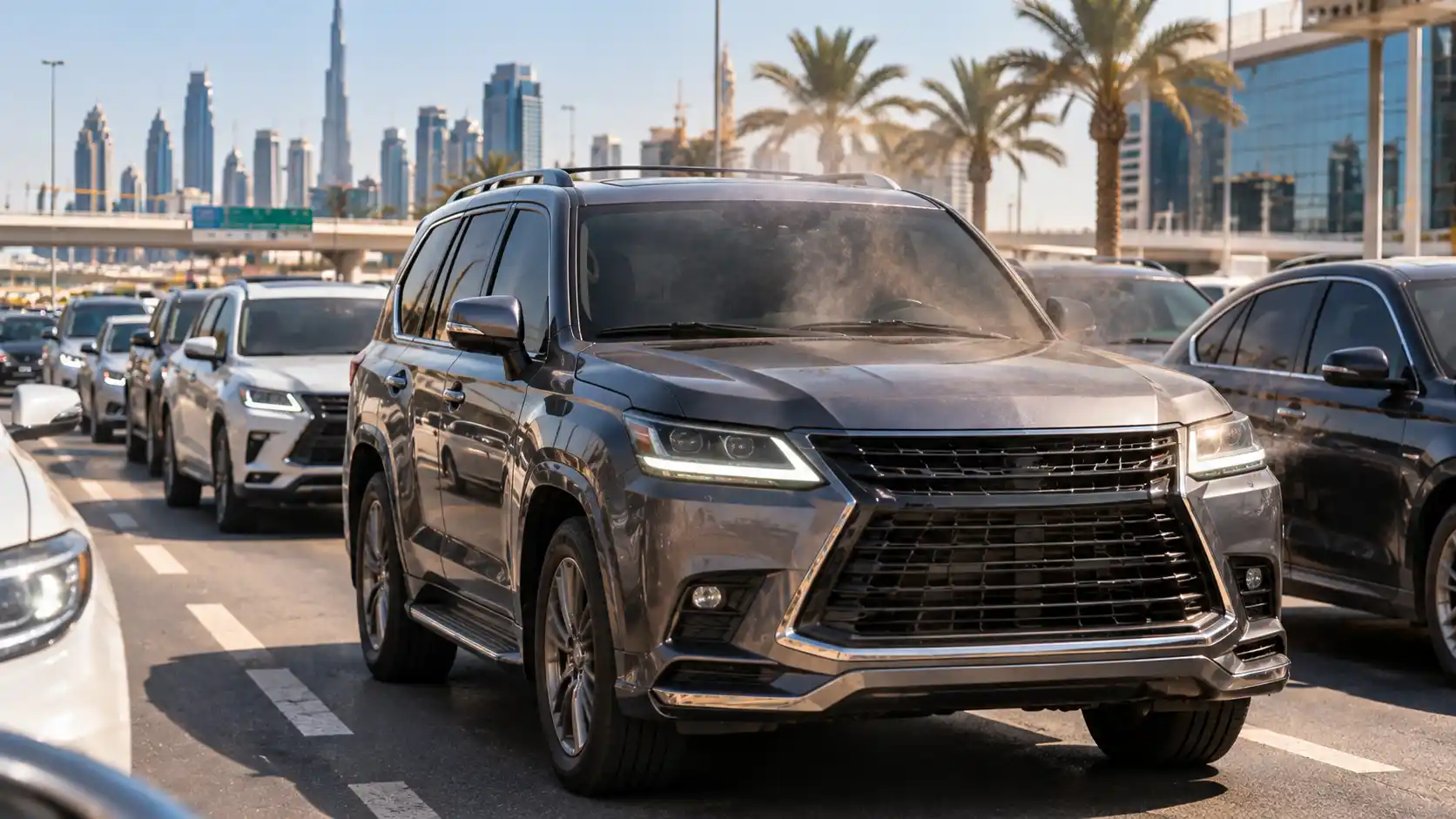
Heat is the biggest enemy of any automatic gearbox, and UAE traffic delivers plenty of it. A gearbox can go from healthy to struggling in a single summer of slow queues and scorching roads.
An automatic gearbox usually overheats in UAE traffic because of old or low transmission fluid, a clogged or failing transmission cooler, a slipping torque converter, constant stop-start crawling, heavy loads, problems in the engine cooling system, or the wrong fluid type.
Each one adds heat faster than the gearbox can shed it. The sections below explain how each cause works, the warning signs to watch for, and how to stop the damage early.
Gearbox Overheating by the Numbers
Transmission fluid normally works at around 80 to 90°C. As it runs hotter, it breaks down much faster, and a widely used rule of thumb says fluid life roughly halves with every 11 to 14°C rise above that range.
The Automatic Transmission Rebuilders Association estimates that 90% of transmission failures are caused by fluid breakdown. That makes heat the root cause behind most gearbox repairs, not just a side effect.
Local conditions make it worse. Workshop experience in Sharjah shows that summer temperatures above 45°C, combined with stop-and-go driving, can raise gearbox wear by up to 30%.
Reasons Why Automatic Gearbox Overheating in UAE Traffic
Overheating Causes at a Glance
Cause | Typical warning signs | Usual fix |
Old or low fluid | Dark, burnt-smelling fluid, slipping | Fluid and filter service, leak repair |
Clogged or failing cooler | Overheating mainly in traffic or on climbs | Clean, flush or replace the cooler |
Slipping torque converter | Engine revs rise without speed, shudder | Converter repair or replacement |
Stop-start crawling | Warning light in long queues | Driving changes, cooler upgrade |
Heavy loads and towing | Overheating on hills or with full load | Auxiliary cooler, shorter service intervals |
Engine cooling faults | Engine and gearbox both run hot | Radiator, fan or thermostat repair |
Wrong fluid type | Harsh shifts, slipping after a service | Drain and refill with correct fluid |
1. Old or Low Transmission Fluid
Transmission fluid cools, lubricates and powers the gearbox all at once. As it ages, heat breaks down its additives, so it carries heat away less well and protects parts less.
Low fluid makes things worse, because there is simply less fluid to absorb heat. A leak from a pan gasket, cooler line or seal can lower the level slowly without obvious signs.
Many manufacturers call their fluid “lifetime”, but UAE heat shortens that life sharply. Changing the fluid every 40,000 to 60,000 km is a safer plan for local driving.
2. A Clogged or Failing Transmission Cooler
Most automatic gearboxes send their fluid through a cooler, often built into the radiator or mounted beside it. Dust, sand and insects can clog the cooler’s fins, while sludge can block its passages.
When the cooler cannot shed heat, fluid temperature climbs, especially at low speeds where airflow is weak. That is why the problem often shows up in traffic rather than on an open highway.
Cleaning the radiator and cooler during routine servicing helps a lot. A damaged or blocked cooler should be flushed or replaced before it causes wider damage.
3. A Slipping Torque Converter
The torque converter connects the engine to the gearbox using fluid. At cruising speeds, a lock-up clutch inside it locks the two together to cut slip and heat.
If that clutch wears or the converter fails, fluid keeps churning inside it and builds heat fast. Owners may notice engine revs rising without matching speed, or a shudder at light throttle.
In slow traffic, the converter rarely locks up, so it naturally runs warmer. A faulty converter turns that normal heat into a real overheating problem.
4. Constant Stop-Start Crawling
Creeping forward in queues keeps the gearbox working without the airflow it gets at speed. Each start from rest also puts load on the clutches inside the gearbox.
Holding the car on a slope with the accelerator instead of the brake makes it worse. The gearbox then slips internally, and that slip turns straight into heat.
Dual-clutch gearboxes, such as the DSG units in many Volkswagen and Audi models, are especially sensitive to this. Their clutches slip slightly at crawling speeds, which builds heat in long queues.
5. Heavy Loads, Towing and Large SUVs
Heavy SUVs, pickups and cars carrying full loads ask more of the gearbox every time they move. Towing a boat or trailer adds even more strain, especially on hills.
The extra load means more slip and more heat inside the gearbox. A cooling system sized for normal driving may not keep up in these conditions.
Owners who tow regularly or drive large SUVs, such as Land Rover models, should consider shorter fluid intervals. An auxiliary transmission cooler can also add a valuable safety margin.
6. Engine Cooling System Problems
In many cars, the gearbox cooler shares the radiator with the engine. If the radiator is clogged, the cooling fan is weak or the thermostat sticks, both the engine and the gearbox run hot.
A failing cooling fan is a common culprit in traffic, because it is the only source of airflow when the car is barely moving. Low coolant or a tired water pump adds to the problem.
If the engine temperature gauge climbs at the same time as a gearbox warning appears, start with the cooling system. Fixing it often solves both problems together.
7. The Wrong Fluid Type
Modern gearboxes need very specific fluids, and they are not all the same. Using the wrong type can change friction inside the clutches and cause slipping and extra heat.
This problem often appears soon after a fluid service at a shop that used a generic product. Harsh shifts, slipping, or a burning smell after a service are clear warning signs.
The fix is to drain the wrong fluid and refill with the correct specification. Always ask which fluid will be used before any gearbox service.
Warning Signs Your Gearbox Is Overheating
Many modern cars show a transmission temperature warning on the dashboard. Others go straight into limp mode, holding one gear with reduced power to protect the gearbox.
Other signs include a burning smell, slipping between gears, late or harsh shifts and delays when selecting drive. Dark brown fluid with a burnt smell is a strong clue that it has already overheated.
These signs often overlap with a gearbox that slips between gears. Catching them early can mean a fluid service instead of a full rebuild.
What to Do If Your Gearbox Overheats
If a warning appears, move to a safe spot and stop as soon as you can. Shift into Park and let the engine idle for a few minutes, so fluid keeps flowing through the cooler, unless the engine itself is also overheating.
Avoid driving hard or pulling a heavy load until the gearbox has cooled. Once it has, check for leaks and, if possible, the fluid level and smell.
If the warning returns, the car needs a proper inspection. Repeated overheating causes lasting damage to clutches, seals and the torque converter.
How to Prevent Gearbox Overheating
Service the Fluid on Time
Change the transmission fluid every 40,000 to 60,000 km in UAE conditions, and sooner if you tow or drive mostly in traffic. Use only the fluid type the manufacturer specifies.
Ask for the filter to be replaced at the same time where the gearbox has one. Fresh fluid and a clean filter give the gearbox its best chance in summer.
Keep the Coolers Clean
Have the radiator and transmission cooler checked and cleaned during routine services. Dust and sand build up quickly on the front of the car.
Check that the cooling fan runs properly in traffic. A weak fan is a common and easy-to-miss cause of high temperatures.
Drive Gently in Queues
Use the brake, not the accelerator, to hold the car on slopes. Leave a small gap in traffic and move in smooth steps rather than constant short bursts.
Avoid hard launches on very hot days. Small changes in driving style can lower gearbox temperatures noticeably.
Conclusion
An overheating gearbox is a warning, not a mystery. Most causes can be found and fixed before they turn into a costly rebuild.
Automatic gearboxes in UAE traffic overheat mainly because of old or low fluid, clogged coolers, slipping torque converters, stop-start crawling, heavy loads, cooling system faults, and the wrong fluid.
Heat breaks down fluid fast, and fluid breakdown is behind most gearbox failures. Regular fluid changes, clean coolers, and gentle driving in queues keep temperatures under control.
Gearbox Repair Sharjah in Industrial Area 10 checks transmission coolers, fluid condition, and fault codes with diagnostic scanners. Book a gearbox check before summer heat turns a small problem into a major repair.
Frequently Asked Questions
What temperature is too hot for an automatic gearbox?
Most automatic gearboxes work best with fluid at around 80 to 90°C. Well above that, the fluid breaks down quickly and internal parts start to wear faster.
Can I keep driving with a gearbox overheating warning?
It is best to stop safely and let the gearbox cool before driving on. Continuing to drive while it is overheating can damage clutches, seals and the torque converter.
How often should I change gearbox fluid in the UAE?
Every 40,000 to 60,000 km is a sensible interval for UAE heat and traffic. Cars that tow or spend most of their time in queues may need it sooner.
Does a transmission cooler help in hot weather?
Yes, a clean cooler is essential, and an auxiliary cooler adds extra capacity for heavy use. It is especially useful for large SUVs, pickups and cars that tow.
Why does my gearbox only overheat in traffic?
In traffic, there is little airflow through the cooler, and the torque converter rarely locks up. Combined with constant stops and starts, this builds heat that the gearbox cannot shed.